Cooling
A liquid-cooled plate for a battery, checked by hand before trusting the CFD.
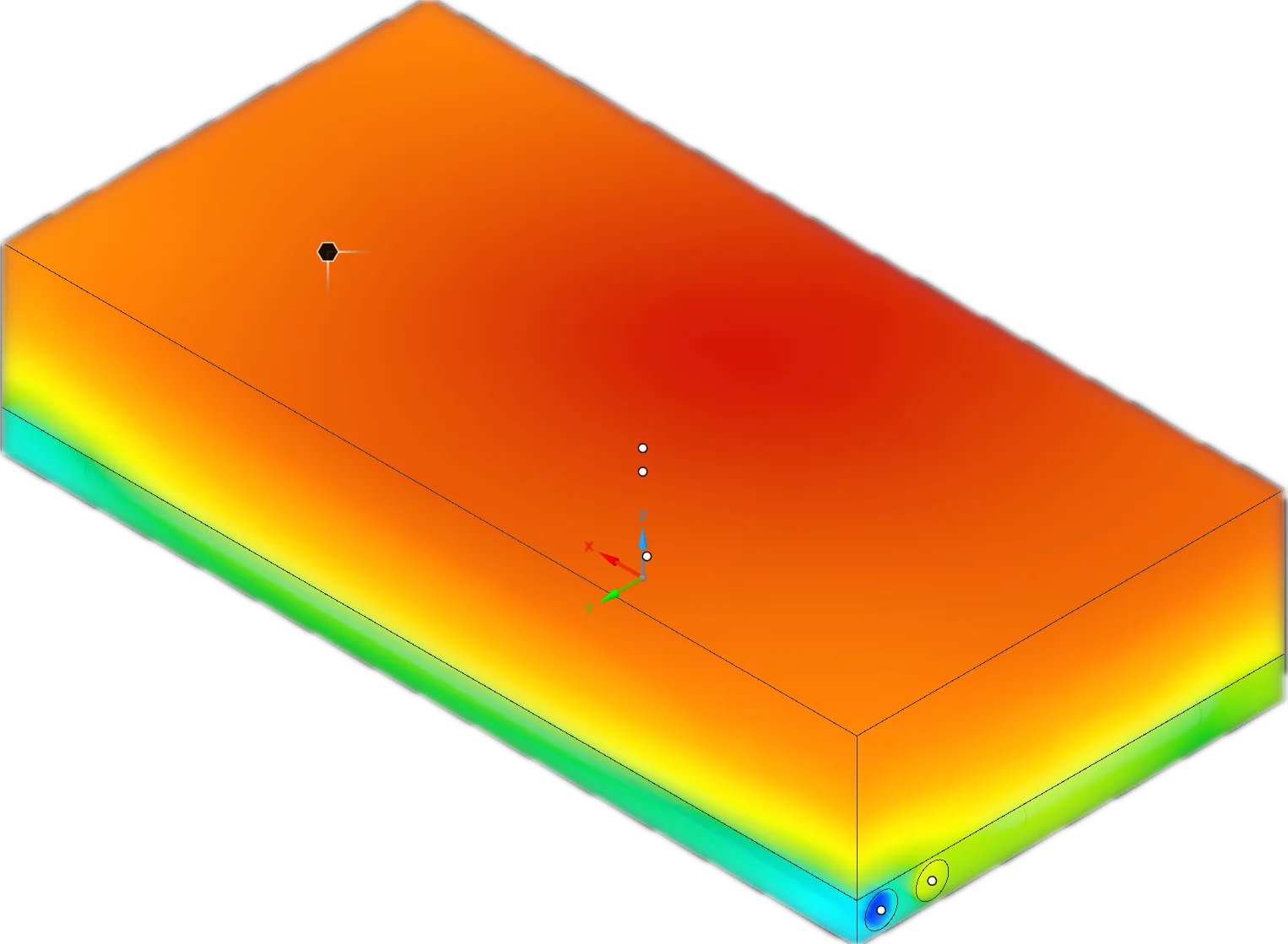
A battery module discharging at 2C sits on an aluminium plate with water running through it. Four channel layouts traded heat removal against pressure loss, each simulated in Ansys and checked against a thermal resistance model worked out by hand.
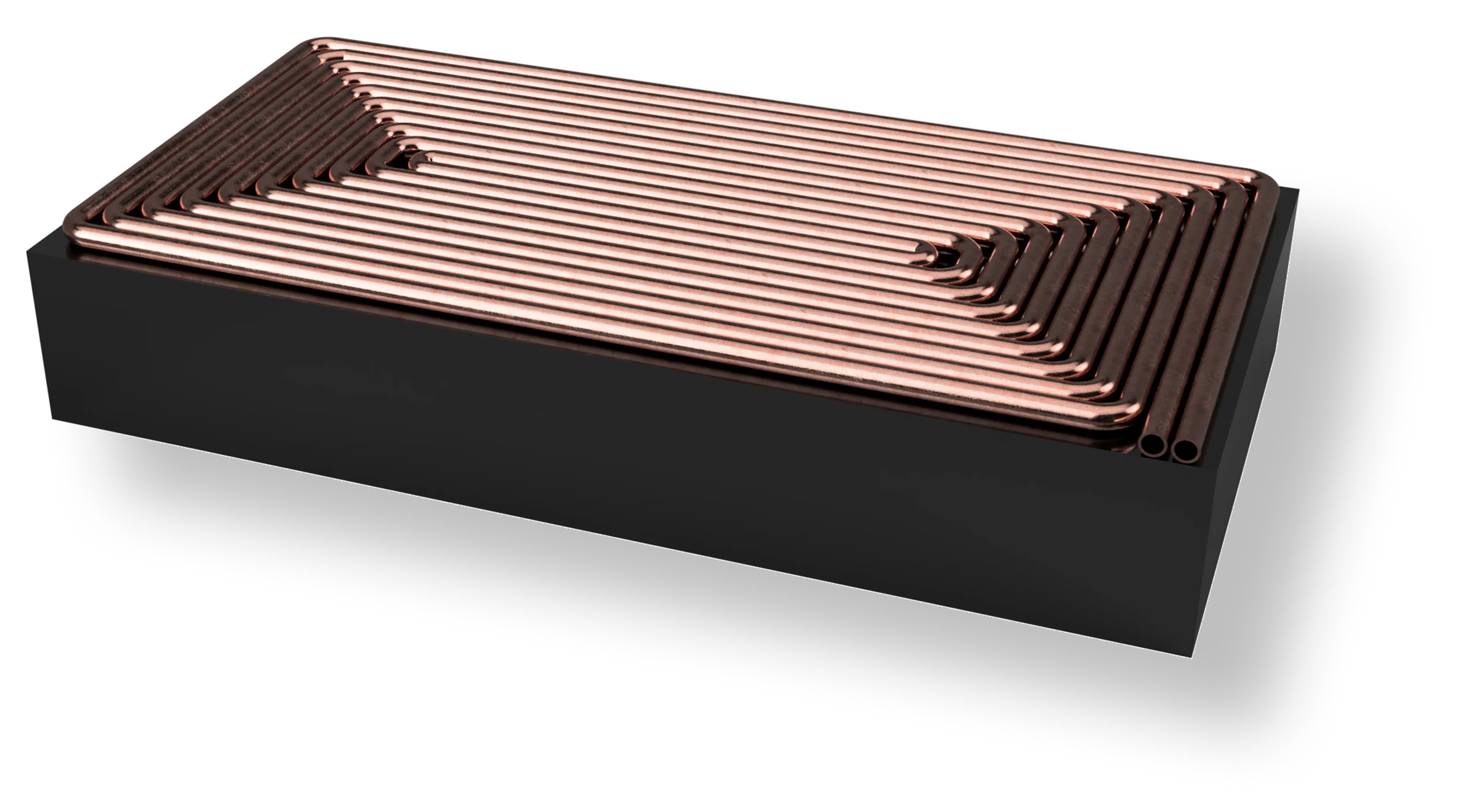
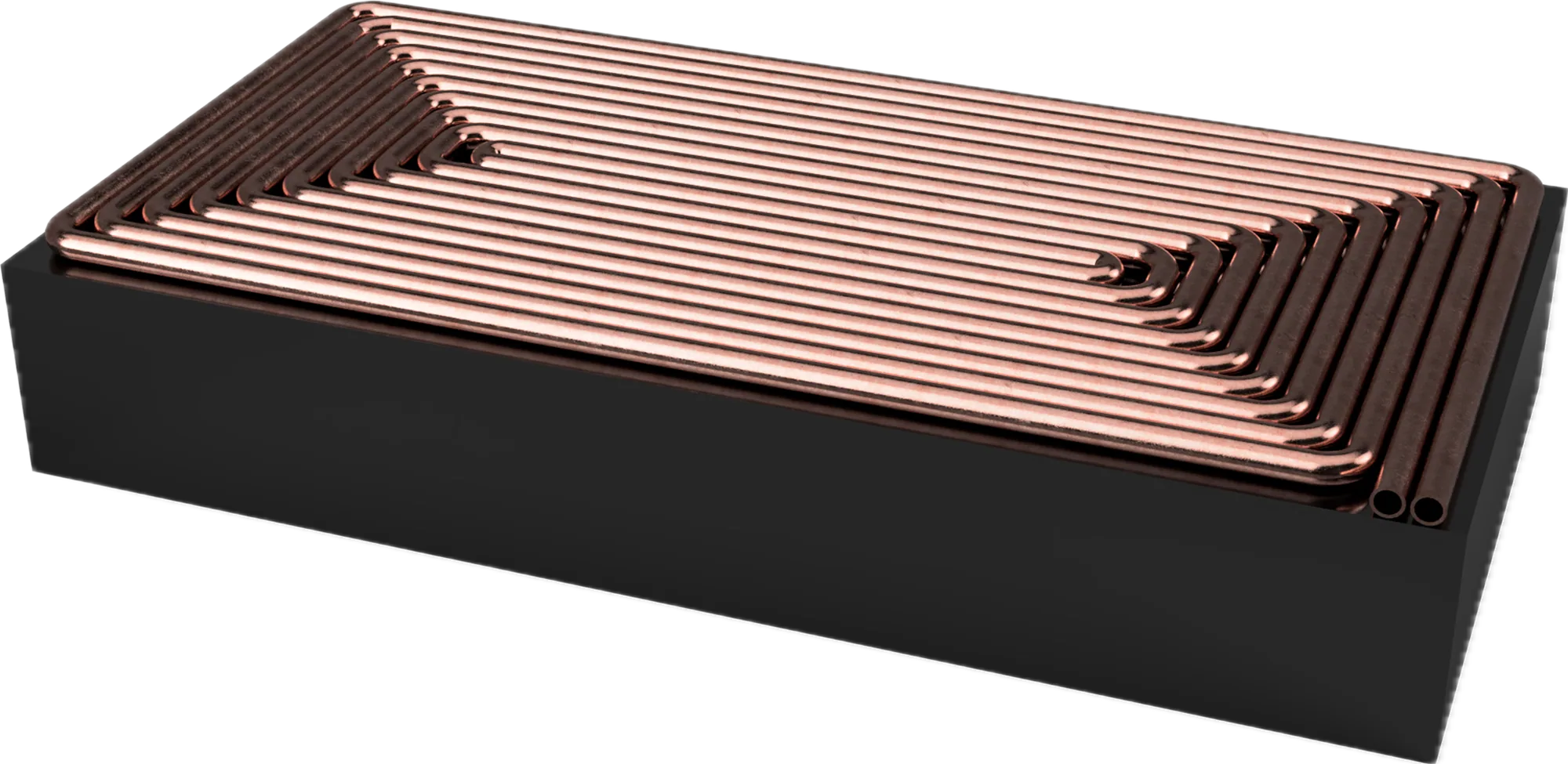
Water enters at 20 °C and 10 g/s, and winds back and forth under the battery.
Aluminium 6061, carrying heat from the battery into the water.
- Brief
- Cool a high-power battery module with a serpentine plate, without the Ansys optimiser.
- Role
- Individual: hand calculations, four layouts in CAD, CFD setup and analysis.
- Outcome
- Curved 16 mm channels cut the pressure drop from 842 Pa to 34.9 Pa, within 2.5 °C of the hand calculation.
The goal was to make my CFD match the books, so I can trust it elsewhere.
- 01
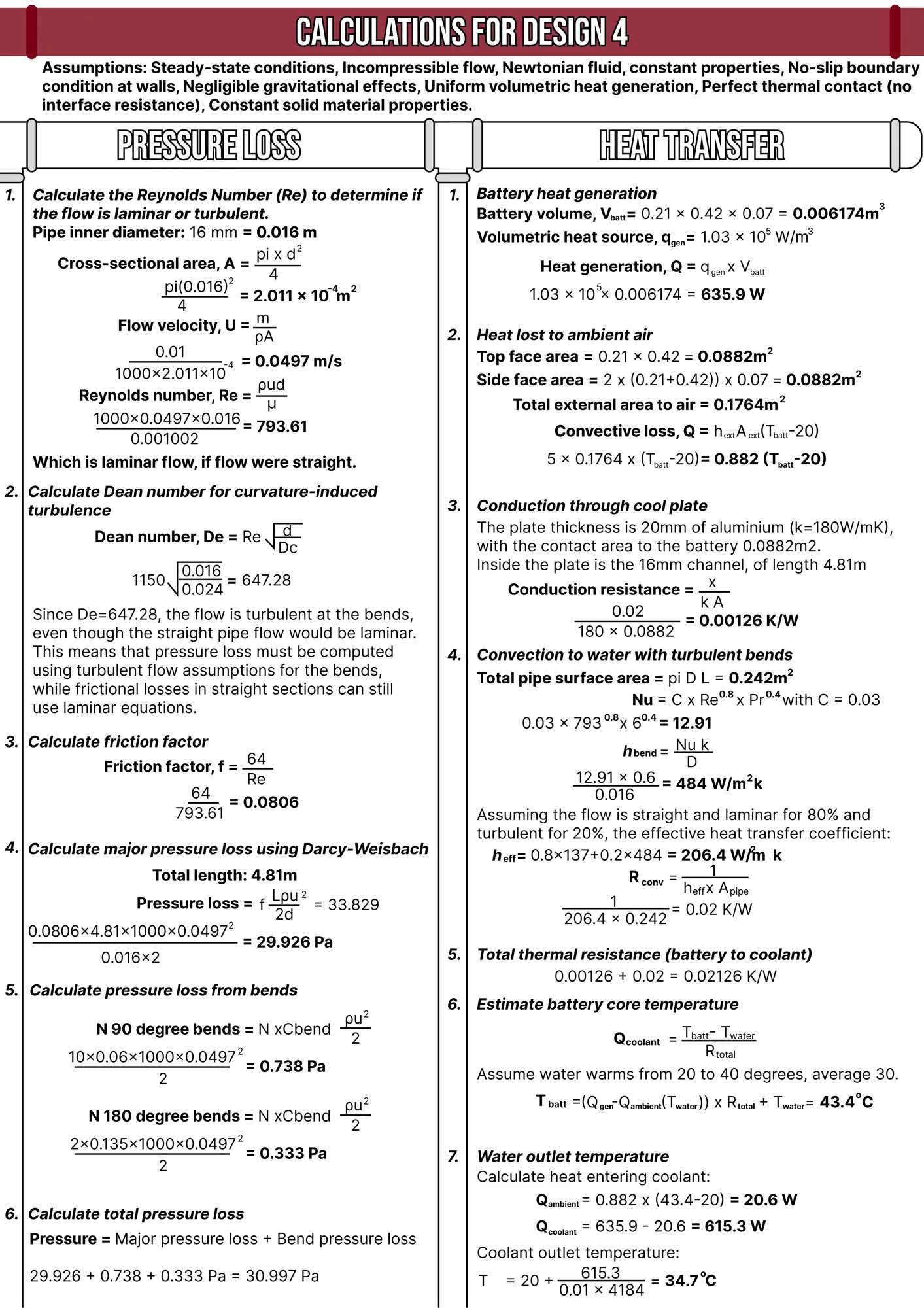
Calculate
A thermal resistance model by hand: 636 W of heat, a 34.7 °C outlet and about 31 Pa of loss.
- 02
Lay out
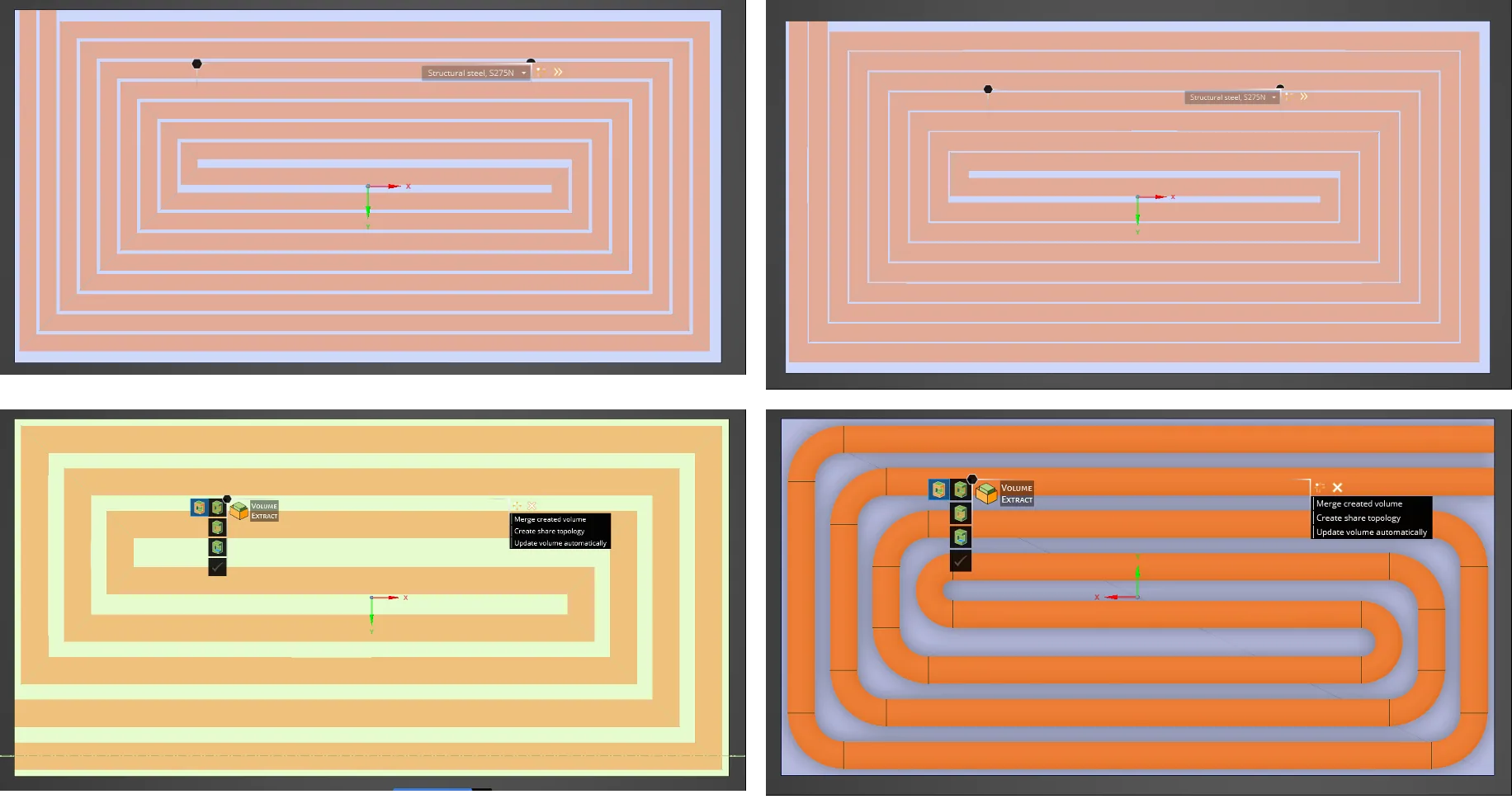
Four layouts: narrower or wider pipes, sharp or curved bends.
- 03
Mesh
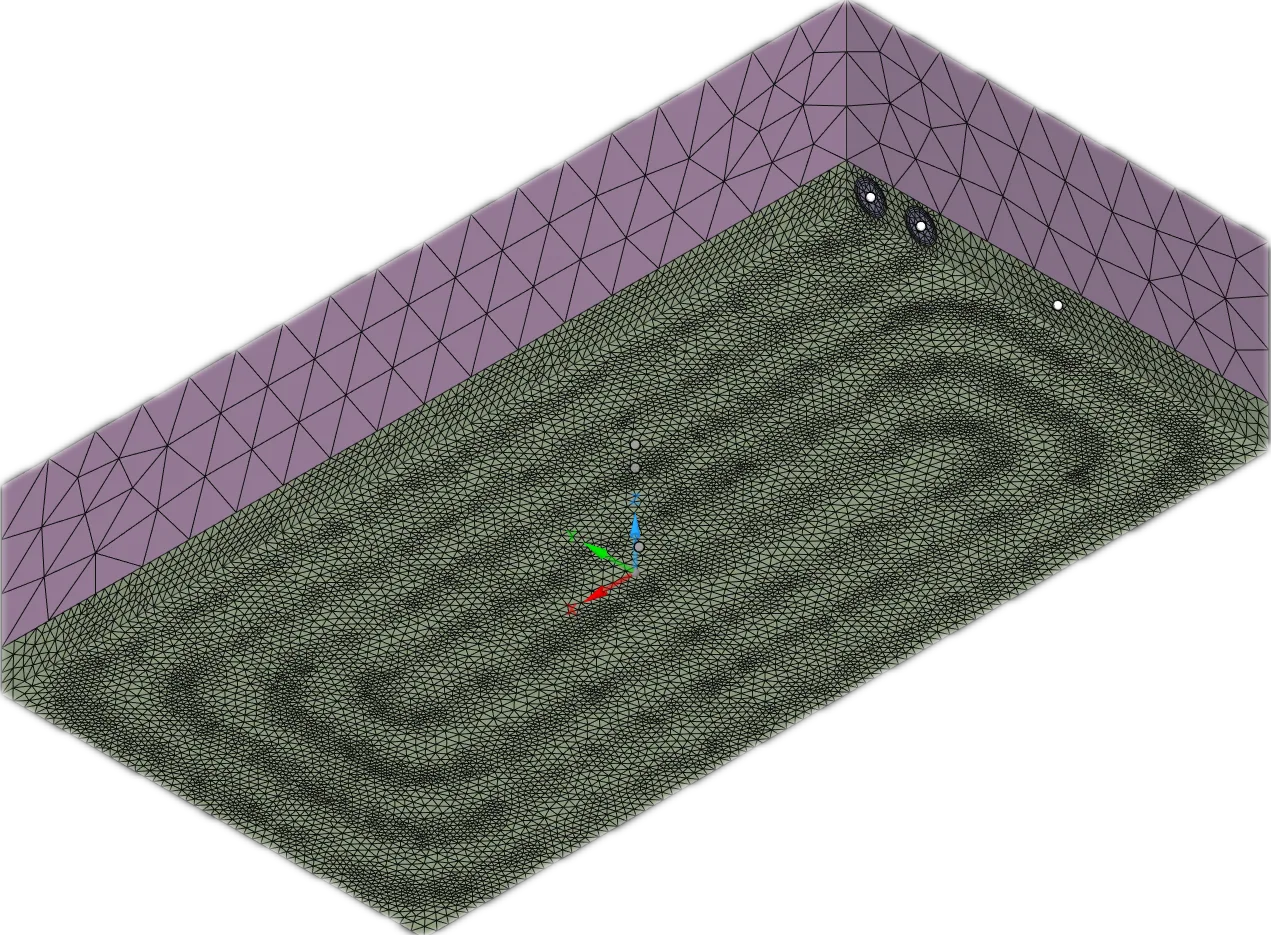
Refined along the channel walls, where the boundary layers are.
- 04
Simulate
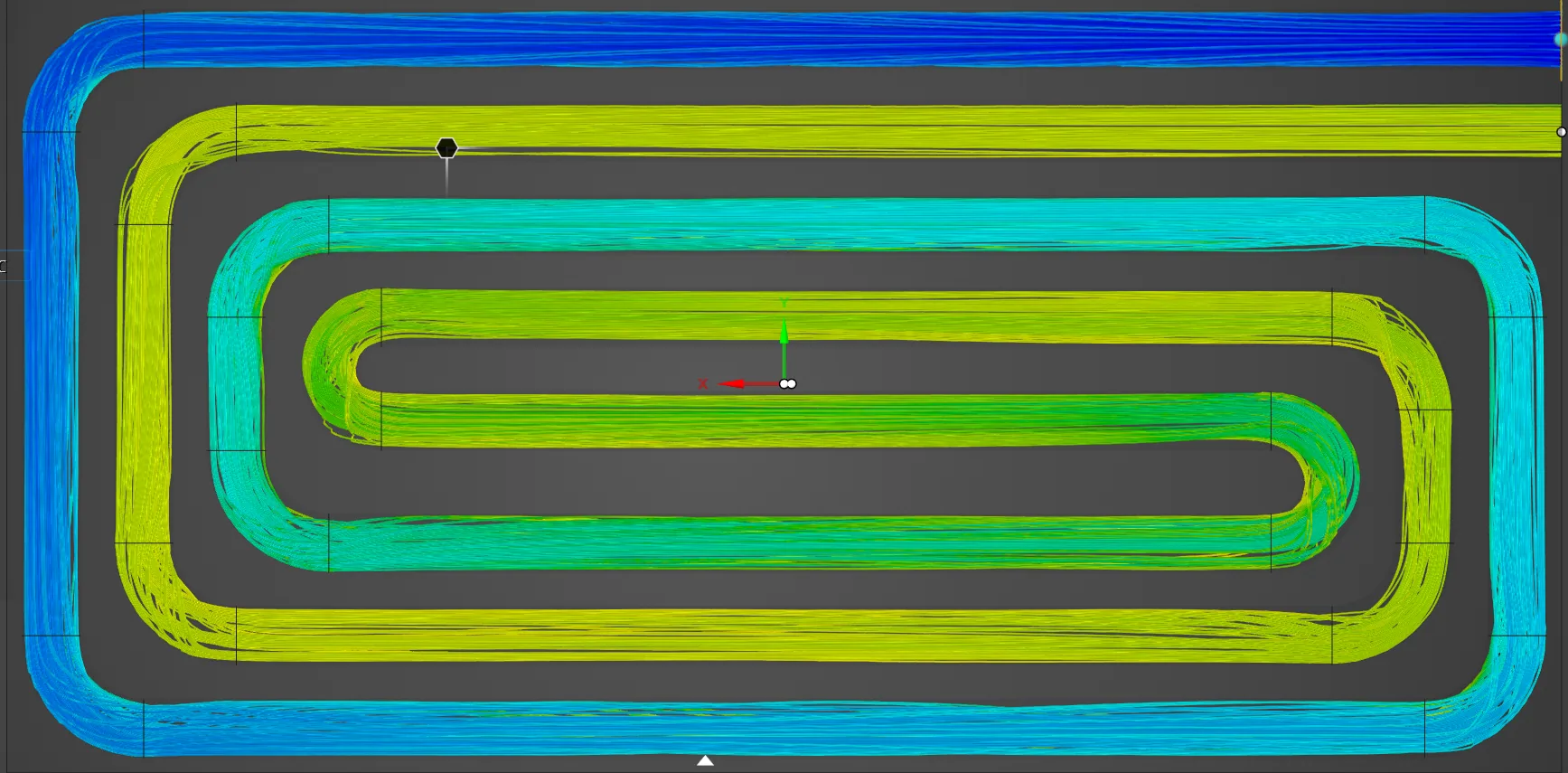
Curved bends set up Dean vortices that mix the flow without the cost of sharp corners.
- 05
Compare
The curved design peaks at 45.9 °C, 2.5 °C from the hand calculation.